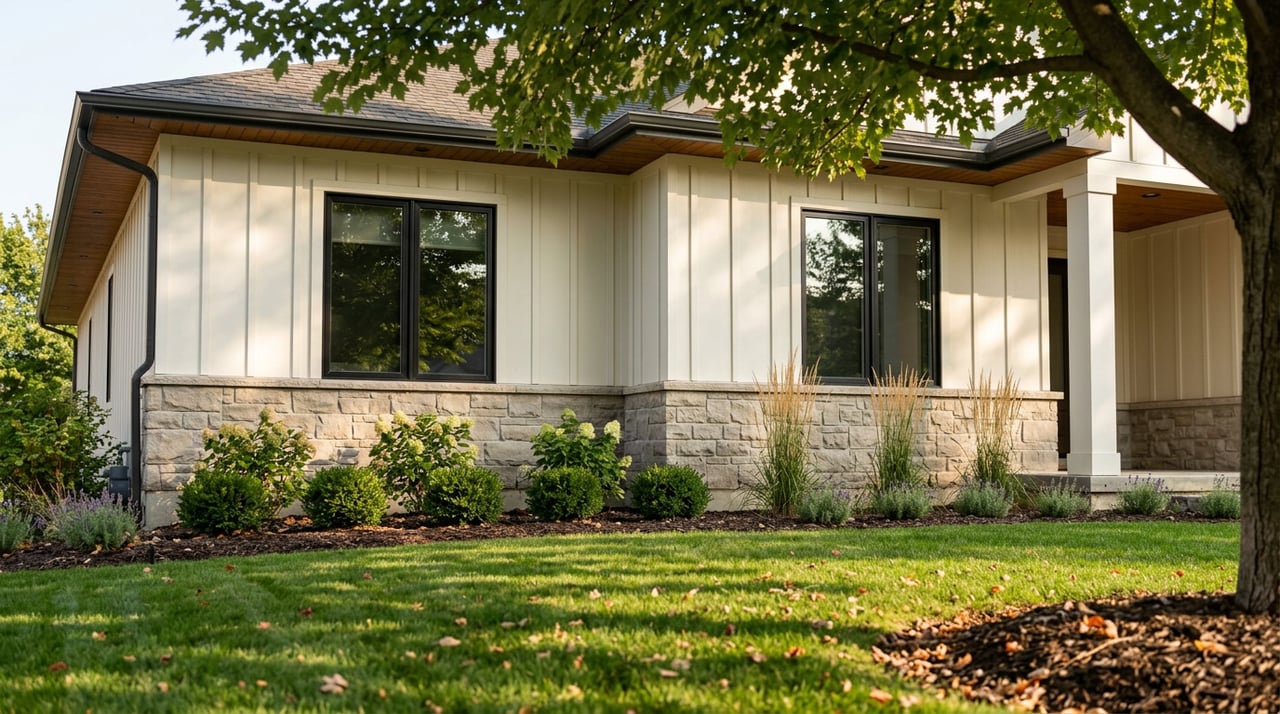
Two houses go up for sale on the same Wednesday in South Meridian. One is your 2018 resale at $560,000. The other is a builder spec two streets over, also listed at $560,000, with a sign on the corner promising a 4.99% rate for qualified buyers, $15,000 in design center credits, and paid closing costs. By Sunday, the spec is under contract. Your open house drew four groups and no offers.
The two homes were not priced the same. They only looked that way.
This is the mechanism most Meridian sellers are missing right now, and it is the difference between a home that sells in 30 days and one that sits into fall. Builders in Meridian are not defending sticker price. They are defending payment. If you are pricing your resale against the list price of a nearby new build, you are pricing above the market on the number the buyer is actually shopping.
The number that reframes the conversation
Meridian's citywide median sale price was $560,000 in March 2026, up 3.7% year over year on Intermountain MLS data, while Ada County overall came in at roughly $540,945 and drifted down about 4.3% year over year in the same window. Meridian resale is outperforming the surrounding county on price. That part of the story is real.
Now look at what new construction did in May 2026. Ada and Canyon County new-construction closings slipped from 211 units in May 2025 to 207 units in May 2026, essentially flat. In the same window the new-construction median sale price rose from $450,000 to $479,990, a 6.66% jump. Sales did not accelerate. Prices went up anyway.
That combination only happens when builders hold list prices while shifting value into financing and finish credits that never touch the closed-price line on the MLS. Zillow's chief economist Mischa Fisher noted in late 2025 that near-record levels of newly built inventory have pushed builders toward mortgage buydowns as the primary tool for moving standing homes. The 6.66% median lift is what that strategy looks like from thirty thousand feet.
For a Meridian resale seller, the takeaway is uncomfortable and useful in equal measure: your competition is showing a strong list price while quietly cutting the buyer's monthly check by two or three hundred dollars.
What a builder incentive actually costs the buyer
The 30-year fixed rate averaged 6.23% in the Freddie Mac Primary Mortgage Market Survey for the week of April 23, 2026, and the current PMMS series has hovered in the low sixes since. Against that backdrop, here is what a typical Meridian builder stack does to a $560,000 home with 10% down and a 30-year loan.
| Offer element | Sticker price | Buyer's rate | Principal + interest | Effective monthly delta |
|---|---|---|---|---|
| Resale, no incentive | $560,000 | 6.25% | ~$3,103 | baseline |
| Spec, permanent 4.99% buydown | $560,000 | 4.99% | ~$2,703 | about $400 less per month |
| Spec, 2-1 temporary buydown | $560,000 | 4.25% year 1, 5.25% year 2, 6.25% year 3+ | ~$2,479 in year 1 | about $624 less in year 1 |
| Spec, $15,000 closing credit at 6.25% | $560,000 | 6.25% | ~$3,103 | same P&I, but the buyer walks in with $15,000 more cash |
A permanent buydown to 4.99% is worth roughly $70,000 to $80,000 of principal in payment-equivalent terms over the life of the loan. A 2-1 temporary buydown is worth less in total but far more in the first twelve months, which is exactly the window the payment-sensitive buyer is stress-testing. A closing credit reads as a smaller number and often wins the offer anyway because it removes real cash from the buyer's Day One out-of-pocket.
The point is not that any single stack is generous. The point is that a Meridian resale listed at parity with a spec home is not really at parity. It is priced two to six hundred dollars a month above the spec on the buyer's payment worksheet.
Where a Meridian resale actually wins
The resale has advantages that never show up in the builder's incentive sheet, and pricing strategy should be built around them rather than around chasing the spec's list price down dollar for dollar.
Established landscaping and fencing are the first. A finished yard in Paramount or Bridgetower represents ten to twenty thousand dollars of work the new-build buyer will spend post-close, usually within eighteen months, usually on financing they have not budgeted. Sod, sprinklers, a rear fence, and mature trees are real money the buyer is comparing against your list price whether they can articulate it or not.
Second is the property tax timing. Idaho's homeowner's exemption removes 50% of assessed value up to $125,000 from the primary residence's taxable value, and for new construction the application window is compressed. A resale buyer inherits an exempted parcel already on the rolls. A new-construction buyer who misses the 28-day window from the assessment notice pays roughly $800 to $1,500 more in first-year property tax on a typical Meridian home. That is a real budget hit in the twelve months when the new-build buyer is also spending on landscaping and window coverings.
Third is location certainty. South Meridian's active-build corridors, including Century Farm, Movado, Sky Mesa, and Reflection Ridge, are still absorbing traffic from the SH-16 buildout, which opened its I-84 interchange in March 2026 and is scheduled to complete the Ustick-to-Chinden segment in Fall 2026. Established resale streets in North Meridian's Paramount, Bridgetower West, The Oaks North, and SpurWing already know their commute times. A buyer touring a spec home in a half-built subdivision is guessing at what the neighborhood will feel like in eighteen months. A buyer touring your resale sees the finished version.
Fourth is upgrade transparency. Builder base prices in Meridian typically exclude flooring upgrades, cabinet finishes, backsplash, and lot premiums, all of which show up as line items during design center appointments and can add $30,000 to $70,000 to a contract that started at the advertised base. Your resale price already includes every upgrade the prior owner paid for.
Pricing moves that answer the buydown
Given that context, three moves matter.
Offer a rate concession, not a price cut. A seller-paid 2-1 buydown on a $560,000 loan runs roughly $10,000 to $13,000 in escrow and produces a first-year payment reduction the payment-sensitive buyer can feel immediately. That same $13,000 taken off the list price barely moves the monthly check. Ask your lender partner to prepare a side-by-side buyer worksheet showing your listing at list price with a 2-1 buydown against the nearest three specs at their advertised rate. The math almost always favors the resale once landscaping and closing costs are pulled into the same frame.
Price to the finished comp, not the builder base. When a builder in Century Farm advertises "from the $480s," the closed sales in that subdivision are landing meaningfully higher once lot premiums and upgrades close out. Ada County MLS closed comps, not builder marketing sheets, are the honest reference set. A Meridian resale seller who prices against the base is pricing against a number no buyer actually pays.
Front-load the disclosure of what the buyer is not spending. Landscaping receipts, fence installation invoices, blinds, and any post-warranty repairs the prior owner completed should live in the listing packet, not in a conversation during due diligence. The resale's structural advantage over new construction is that its total cost of ownership is already sunk. Make that visible before the buyer walks into the design center.
A short FAQ
Should I wait for rates to drop before listing? Freddie Mac's April 23, 2026 survey put the 30-year at 6.23%, and forecasts from Zillow, Redfin, and Realtor.com have pointed to the low sixes settling in through the year. A meaningful drop is not the base case, and waiting concedes the summer buyer pool to the builder inventory that is actively discounting the payment.
Do builder incentives show up in closed comps and hurt my appraisal? The sticker price is what closes and what appraisers pull. Seller-paid concessions and buydowns are disclosed on the closing statement but do not reduce the recorded sale price. That is part of why Meridian resale comps are holding: the builder's payment cut is invisible to the comp set that appraises your home.
Is the North Meridian versus South Meridian split relevant to pricing strategy? Yes. South Meridian carries the heaviest active-build load right now, so a resale there competes with more incentive stacks per square mile. North Meridian resales in Paramount and Bridgetower West are competing more against each other and less against builders, which changes the buydown math but not the underlying principle: price to the payment.
Selling a Meridian home in 2026 is a pricing problem disguised as a marketing problem. The right list price is the one that produces a competitive monthly payment relative to the specs down the road, not the one that matches their advertised sticker. If you would like a lender-side buyer worksheet built for your specific block and floor plan before you list, Clint Foote can put that math in front of you in a single sitting. Let's connect.